Loading...
Serving Palm Coast, FL and surrounding areas. (386) 529-0883
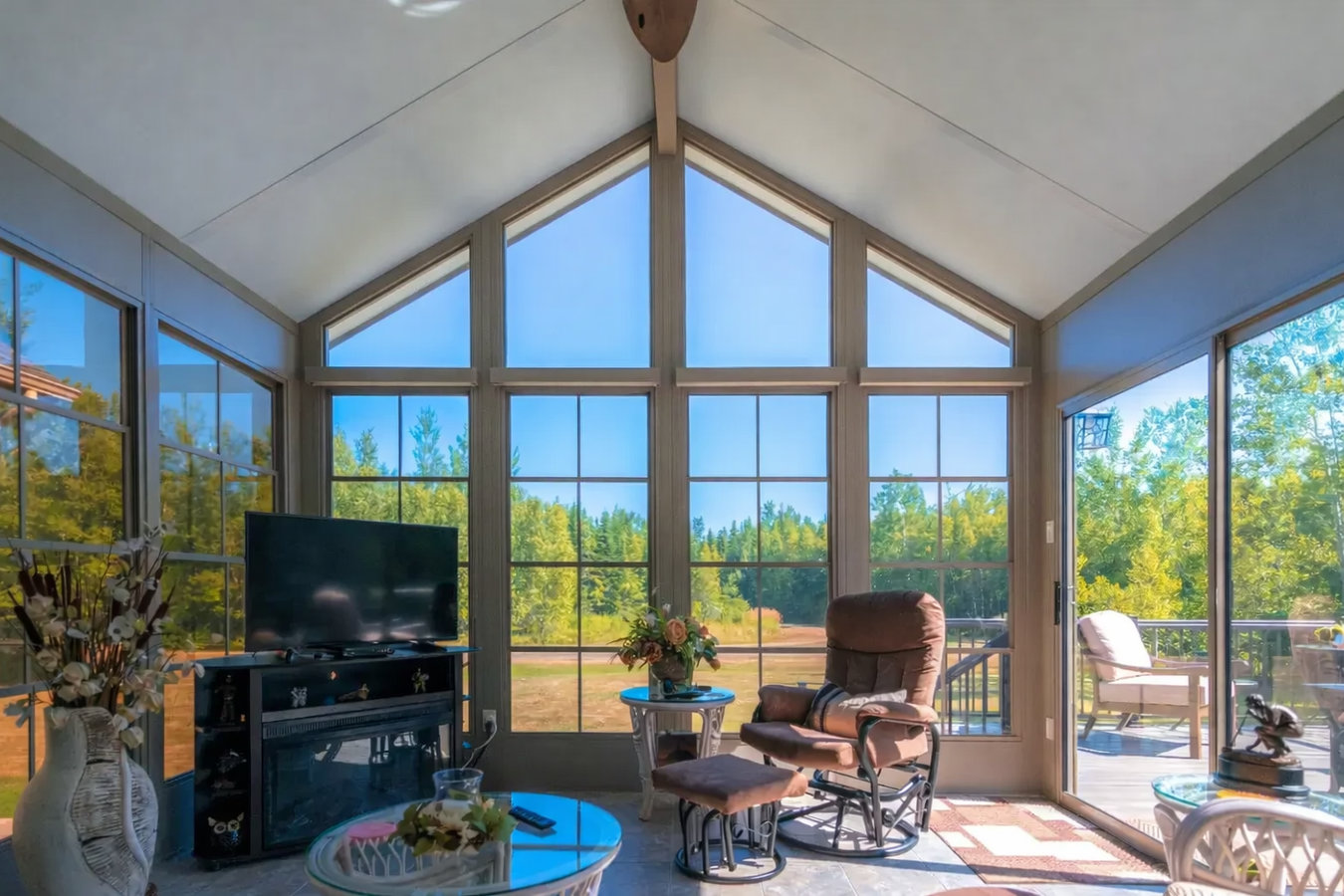
A screened porch is useless in July, and open patios lose to bugs and afternoon storms. Vinyl sunrooms give Palm Coast homeowners a sealed, comfortable, low-maintenance space built for Florida's heat, humidity, and coastal wind requirements.
A vinyl sunroom in Palm Coast is a fully enclosed room addition built with vinyl-framed walls and a roof system designed to let in natural light while keeping out Florida's heat, bugs, and rain - with most projects taking six to ten weeks from contract signing to move-in, including Flagler County permit review.
Vinyl frames do not rust, rot, or need painting - which matters a great deal in Palm Coast's humid, salt-air environment. That low-maintenance quality is one of the main reasons homeowners here choose vinyl over aluminum or wood. The enclosed space gives you year-round access to natural light and garden views without the insects, afternoon rain, or summer heat that make open patios and screened porches unusable for much of the year. If you want to compare frame and enclosure options before deciding, our sunroom additions page covers the full range of approaches we build.
Every vinyl sunroom we install in Palm Coast is permitted through Flagler County Building Services and built with materials approved for Florida's coastal wind zone. An unpermitted addition - or one built with components not rated for local wind loads - creates problems during a storm and creates bigger problems when you go to sell your home.
If your back porch or lanai sits unused through Palm Coast's long summer because it is simply too hot and humid to sit in, that outdoor space is not working for your lifestyle. A vinyl sunroom with proper insulation and cooling changes the equation completely - you get a comfortable room for all twelve months, not just the four mild ones.
If you notice water coming in around the edges of your patio roof during heavy rain, or if the structure flexes noticeably when a storm rolls through, it is not built to the standard that Palm Coast's weather demands. A properly engineered vinyl sunroom is sealed and anchored to handle Florida's wind and rain - not just block the occasional drizzle.
Flagler County's mosquitoes and no-see-ums make outdoor evenings uncomfortable for much of the year. If you find yourself heading indoors as soon as the sun drops, an enclosed vinyl sunroom gives you the natural light and garden views of being outside without the insect problem - no screens needed.
If you are thinking about listing your home in the next few years, a permitted vinyl sunroom with climate control is one of the additions that appeals to Florida buyers looking for flexible living space. An unpermitted or poorly built enclosure, on the other hand, can become a liability during a home inspection - doing it right now protects your investment later.
Every vinyl sunroom project starts with an on-site visit to measure your existing patio or deck, check how the room will attach to your home, and look at the ground conditions under the slab. In Palm Coast, much of the housing stock was built on sandy coastal soil that does not compact the way clay or loam does - a sunroom foundation in this area requires specific preparation to prevent settling over time, and we build that step into every project. We also ask about your HOA at the very first meeting, because many Palm Coast communities require architectural review before a permit can even be submitted, and that timeline needs to be built into the schedule from the start.
For homeowners who want to think through the full design before committing to a specific frame system, our sunroom additions page covers the broader options we build across Palm Coast. And for homeowners with an older screened enclosure they want to upgrade rather than tear down completely, our three season sunrooms page covers a lighter-weight approach that can work well for homeowners who mainly use the space in the cooler months.
Best for homeowners who want an enclosed, insect-free space for Palm Coast's spring and fall months and are comfortable with the room being less usable during the peak of summer heat.
Best for homeowners who want a climate-controlled room they can use every day of the year - insulated panels, heat-blocking glass, and a dedicated cooling source are all part of this option.
Best for homeowners with a solid existing concrete slab who want to add walls and a roof without major foundation work - a faster and often more cost-effective path when the slab is in good shape.
Best for homeowners starting from bare ground or replacing a deteriorated slab - we handle full foundation prep, pour, and cure before framing the room, with ground conditions assessed at the site visit.
Palm Coast averages over 230 sunny days a year, and summer temperatures regularly push into the low 90s with humidity that makes it feel even hotter. A sunroom without proper insulation and a dedicated cooling source becomes unusable from May through September - which is most of the year. Vinyl's natural resistance to rust, rot, and paint failure makes it a particularly good fit for this environment. Aluminum frames eventually oxidize and need repainting in a coastal climate; vinyl stays clean and holds its color with only occasional washing. Homeowners in Flagler Beach face the most demanding salt-air conditions in the area - vinyl outperforms other frame materials there more than anywhere else.
Flagler County falls within Florida's coastal wind zone, which means every glass panel, roof connection, and frame anchor in your sunroom must be rated for the wind loads that come with living on the northeast Florida coast. That requirement adds cost - it also means the room is built to stay attached to your house during a serious storm rather than become debris in your neighbor's yard. Homeowners in Ormond Beach and nearby coastal communities face the same wind zone requirements, and we build to those standards across the entire service area.
We gather basic information - your address, the approximate size of your patio or deck, and how you want to use the room - then schedule a site visit at a time that works for you. There is no obligation at this stage and no fee for the visit.
We measure your space, assess the ground conditions, check your HOA status, and talk through the options - frame system, roof style, glass type, and cooling approach. You receive a detailed written proposal afterward that spells out exactly what is included, so you can compare it against other quotes fairly.
Once you accept the proposal, we handle HOA submission if your neighborhood requires it and submit the permit application to Flagler County Building Services. Permit review typically takes a few weeks - we manage the process and keep you updated so you do not have to chase the building department yourself.
With permits approved, the crew preps the ground, pours or verifies the slab, frames the vinyl walls, installs glass panels and the roof system, and ties everything into your home's exterior. A county inspector reviews the finished work, and we walk you through the completed room before handing you copies of all permit records.
We visit your home, measure the space, and give you a detailed written quote you can compare against anyone else - no obligation.
(386) 529-0883Flagler County's coastal wind zone requires sunroom panels, roof connections, and frame anchors to be rated for significant wind loads. We specify and install systems with the product approvals required for this area - not generic enclosure kits sold without regard to local requirements.
The Florida Building Commission sets the wind-resistance standards that every Palm Coast sunroom must meet - our builds are designed to pass inspection.
We do not treat cooling as an afterthought. Every four-season vinyl sunroom proposal includes insulated wall and roof panels and a plan for air conditioning - whether that is extending your existing system or adding a dedicated mini-split unit - so the room is actually livable in Palm Coast's summers.
Most of Palm Coast is built on sandy coastal soil that shifts more than homeowners expect. We assess the ground at every site visit and prepare the base specifically for local conditions - the step that prevents settling and cracking that shows up a few years after an improperly built enclosure.
We do not consider a project finished until the Flagler County inspector has signed off and you have a copy of the closed permit in your hand. An unpermitted addition in Palm Coast creates real problems when you sell or make an insurance claim - we eliminate that risk on every job.
Verify any Florida contractor's license at the Florida DBPR lookup tool before signing anything.
From the first site visit to the final walkthrough, every step of the process is handled for you. If you have questions about vinyl sunrooms for your Palm Coast home, call or send us a message and we will talk through the options with no pressure and no commitment.
The full range of sunroom addition styles we build in Palm Coast - from light three-season enclosures to fully insulated four-season rooms.
Learn MoreA lighter-weight enclosed space built for Palm Coast's spring and fall months, with windows and screened openings rather than full climate control.
Learn MorePermit applications to Flagler County fill up as the season picks up - reach out now and we will get your project in the queue before the wait grows.