Loading...
Serving Palm Coast, FL and surrounding areas. (386) 529-0883
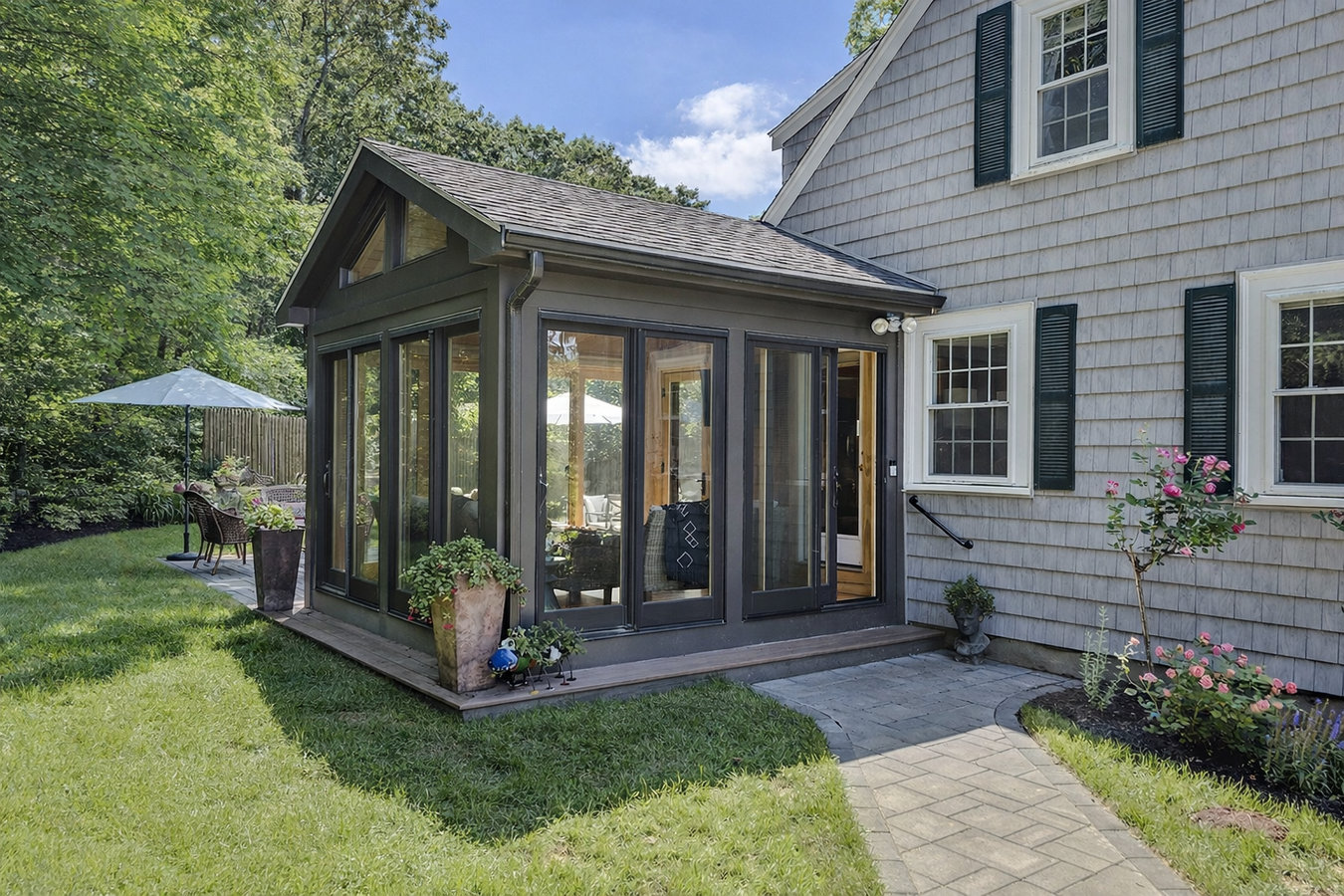
A four season sunroom is a fully conditioned room you can use in July just as comfortably as January. Built with insulated walls, sealed windows, and a real cooling connection - not a porch, not a screened enclosure.
Four season sunrooms in Palm Coast are permanently attached additions with a real foundation, insulated walls and roof, sealed windows rated for Florida's climate, and a heating and cooling connection - designed for daily use in any weather, with most projects completed in four to eight weeks of active construction after permits are approved.
The word "four season" is the operative phrase. A screened porch or a basic three-season room lets the weather in. In Palm Coast, that means the space is unusable for much of the year - too hot from May through September, too humid after storms, and too exposed during hurricane season. A properly built four season sunroom is a real room: it stays comfortable when it is 93 degrees outside, the windows seal tight in a thunderstorm, and the structure is engineered to stay standing in high winds. If you are comparing your options, our three season sunrooms page explains the difference in practical terms.
Because a four season sunroom adds conditioned living space, it is treated as a permanent addition by the City of Palm Coast - which means a building permit is required, and the room will likely affect your home's assessed value. Your contractor should walk you through both before you sign anything. For homeowners specifically focused on how the room performs year-round, our all season rooms page covers the performance standards we build to in more detail.
If you walk past your screened porch from May through October without using it because the heat and bugs make it miserable, that is a clear sign you would benefit from an enclosed, air-conditioned space. Palm Coast summers are long and intense - a screened room simply cannot compete with the heat and humidity for most of the year.
If you have an existing sunroom or enclosed porch that heats up like an oven in summer or gets damp and musty when storms roll through, it was likely not built to the standard a true four season room requires. In Palm Coast, where afternoon thunderstorms are a near-daily occurrence in summer, poor window seals or inadequate insulation show their weaknesses fast.
If you need a dedicated space for a home office, a reading room, or a place to entertain without crowding the living room, a four season sunroom addition is one of the most cost-effective ways to add real, usable square footage. In Palm Coast's real estate market, adding permitted living space also strengthens your home's resale position.
Palm Coast has beautiful natural surroundings - canals, preserves, and mature landscaping are common in many neighborhoods. If the heat, humidity, mosquitoes, or afternoon storms keep driving you inside before you are ready to go, a four season sunroom lets you stay connected to that view in complete comfort.
Every four season sunroom we build starts with an on-site assessment and a foundation suited to your lot's specific soil conditions. The walls and roof use insulated panels designed for Florida's subtropical heat and humidity - not off-the-shelf components pulled from a northern catalog. Windows are selected for their solar heat gain rating, which determines how much heat enters the room on a July afternoon. We extend your existing HVAC system into the space or install a dedicated unit, depending on what your home's current setup can handle. For homeowners interested in a broader comparison of enclosure options, our three season sunrooms page explains where that option makes sense, and our all season rooms page covers the performance specs that define a room built for Florida's climate.
We handle the complete permit and approval process: the City of Palm Coast building permit application, plan review coordination, multi-stage inspections, and HOA architectural review submissions for communities that require them. Flooring, trim, electrical outlets, and ceiling fans are all completed before handoff. You receive a written certificate of completion after the final city inspection passes.
Best for homeowners who want a lower-cost enclosed space for spring and fall use - knowing it will not be fully comfortable in Palm Coast's peak summer months.
Best for homeowners who want a room that performs consistently through every season, with materials and insulation rated specifically for Florida's climate demands.
Palm Coast's subtropical climate means summer temperatures regularly exceed 90 degrees with humidity that stays high for months at a time. A four season sunroom built here needs windows and roof panels specifically rated for Florida's solar intensity - otherwise the room becomes an oven in July and your cooling bills spike. Flagler County's coastal location also puts every permanent addition under Florida Building Code requirements for wind resistance, including the use of impact-rated or storm-shutter-equipped glazing in coastal zones. That is a non-negotiable in this area, and it is one reason building a sunroom here costs more than in states with less demanding standards. Any contractor who bids significantly lower than others without a clear explanation is worth questioning on materials.
The foundation and soil conditions here are equally important. Much of Palm Coast was developed on sandy, loosely packed ground - a byproduct of the ITT-era development on former pine flatwoods in the 1970s and 1980s. Sandy soil shifts under slabs, especially after dry stretches, and lots that back up to the city's canal network have elevated moisture levels that compound the problem. We serve homeowners throughout Ormond Beach and Daytona Beach as well, and this same combination of heat, humidity, and coastal soil conditions shapes how we approach every project in this region.
We ask upfront about the size of the space you have in mind, whether you have an HOA, and what you are hoping to use the room for. You will hear back within one business day, and we show up to the estimate prepared with realistic options for your situation - not a generic pitch.
We visit your home, assess your lot's drainage and soil conditions, look at how your existing roofline connects, and talk through your window and interior choices. You leave with a written estimate - not just a verbal number - and a clear sense of what the project involves.
We submit the HOA architectural review documents if your community requires them, then apply for the City of Palm Coast building permit. This stage typically takes several weeks - use that window to finalize your flooring and interior choices so you are ready to move fast once the permit is approved.
Foundation, framing, windows, roofing, insulation, and finishing typically take four to eight weeks. The city's inspector visits at key stages and again at completion. After the final inspection passes, we walk through the room with you, show you how everything operates, and hand over your certificate of completion.
We come to your property, assess your lot, and give you a written estimate with no pressure and no vague ballparks. You will hear back within one business day of reaching out.
(386) 529-0883We specify windows with verified solar heat gain ratings and storm resistance documentation appropriate for Flagler County's coastal wind zone. The ENERGY STAR window ratings program sets the performance baseline we build from for every room in this climate.
The City of Palm Coast's multi-stage inspection process means the work is reviewed at foundation, framing, and completion - not just at the end. We handle every step of that coordination so you do not have to navigate plan reviews, inspection scheduling, or approval letters on your own.
A large share of Palm Coast's neighborhoods - including many developed during the original ITT community build-out - have active architectural review requirements. We know what these HOAs typically ask for and how to prepare a submission that gets approved without back-and-forth delays that push your project timeline.
One of the most common homeowner complaints about contractors is watching the price climb after the work has started. You receive a detailed written estimate before anything is signed. Any change that affects the price is discussed and approved by you in writing before it happens - no surprises on the final invoice.
Building a four season sunroom in Palm Coast requires navigating the city's permit process, understanding how local soil conditions affect foundation prep, and specifying materials that perform in a subtropical climate with active hurricane seasons. These are local details that matter on your specific project, not just general best practices.
A lower-cost enclosed porch option for homeowners who want comfort in spring and fall - and understand it will not be fully conditioned through Palm Coast's peak summer months.
Learn MoreRooms built to perform consistently through every season, with insulation and glazing specs matched specifically to Florida's subtropical climate and storm exposure.
Learn MoreCall Palm Coast Lanai Sunrooms & Patios today or send a message to set up your free on-site estimate. We will walk your property, talk through your options, and give you a real written number before you commit to anything.