
Loading...
Serving Palm Coast, FL and surrounding areas. (386) 529-0883
Palm Coast Lanai Sunrooms & Patios handles patio-to-sunroom conversions, screen room installation, and patio enclosures for South Daytona homeowners. We work with the city permit office and respond to every inquiry within one business day.
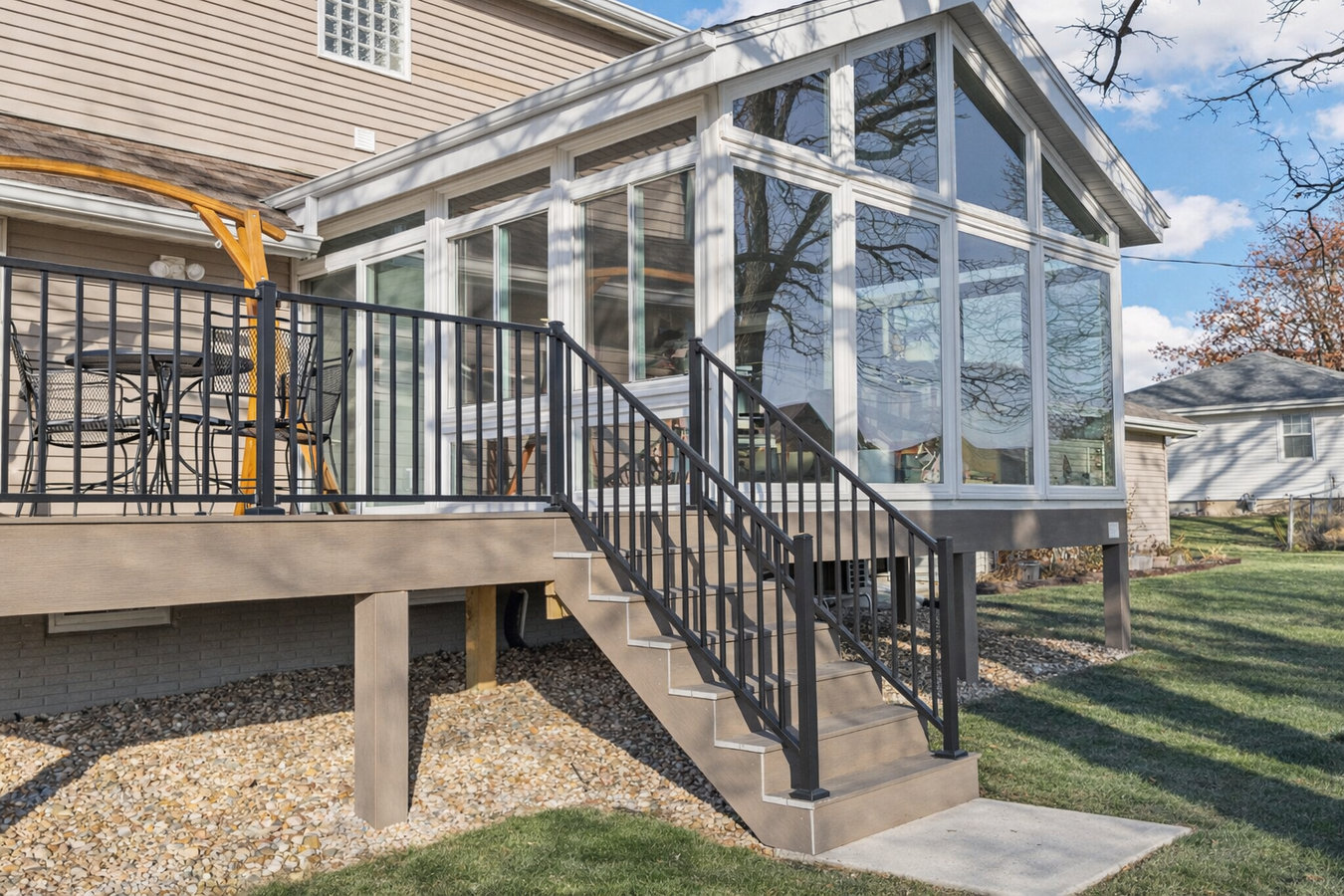
South Daytona is full of single-story concrete block ranch homes with covered back patios that sit unused most of the year because of heat, humidity, and insects. Converting that existing covered slab into an enclosed, usable room is one of the most practical investments you can make on this type of home. Our patio-to-sunroom conversion work starts with a slab inspection - important in South Daytona where sandy soil and mature tree roots can cause concrete to shift or crack over decades.
South Daytona sits along the Halifax River, and mosquito and no-see-um pressure from the waterway is significant during the warmer months. A screened porch or screen room lets you use the back of your house from spring through fall without the insects, and it costs considerably less than a fully enclosed sunroom.
South Daytona's afternoon thunderstorms arrive almost daily from June through September, pushing heavy rain across any open patio in minutes. A patio enclosure - whether screen-panel or glass-panel - keeps the weather out while preserving the outdoor connection that most ranch-home owners here want from their back yard.
South Daytona homeowners who want to use their sunroom comfortably even in July need insulated glass, a proper thermal break, and a connection to the home's HVAC system. A fully conditioned four season room is especially useful near the Halifax River, where ambient humidity makes an unconditioned space genuinely uncomfortable for much of the year.
South Daytona's mild winters - with average January highs in the mid-60s - make a three season room genuinely comfortable from October through April without any heating or cooling system. It is a cost-effective option for homeowners who mainly want a dry, insect-free outdoor space during the cooler months.
For South Daytona homeowners who do not have an existing covered patio to convert, a new sunroom addition built from the ground up is a straightforward option on the compact lots common here. We evaluate the foundation and wall conditions of the existing concrete block home before any new structure is attached.
South Daytona covers roughly three square miles along the Halifax River, and nearly all of the city's housing stock was built between the 1950s and the 1980s. These are mostly single-story concrete block ranch homes with attached carports or garages, low-pitched roofs, and back patios - a very consistent building profile that carries predictable strengths and weaknesses. After 40 to 70 years, the concrete slabs on these properties have often been through enough seasonal heat cycles, heavy rains, and root pressure from mature oak and palm trees that they carry cracks, uneven sections, or soft spots. Any contractor planning to attach a new structure to one of these homes needs to evaluate the slab before quoting, not after the project starts.
The sandy coastal soil that sits under most of South Daytona is another factor that separates this city from what contractors encounter in other parts of Florida. Sandy soil drains quickly in dry weather and becomes waterlogged near the Halifax River and low-lying drainage channels after heavy rain. Over time, it shifts and settles in ways that lift and crack concrete, and the volume of summer rainfall here accelerates that process. Volusia County's hurricane wind-load requirements apply throughout South Daytona, and any attached outdoor structure needs to meet those standards. Properties near the river may also fall within FEMA flood zones, which affects how foundation and slab prep for a new structure should be approached.
Our crew works throughout South Daytona regularly, and we understand the local conditions that affect sunroom and patio enclosure work here. We pull permits through the City of South Daytona Building Department and are familiar with the inspection process for attached structures on the ranch homes that make up virtually the entire city.
South Daytona is a compact, easy-to-navigate city. US-1 (Ridgewood Avenue) runs right through the middle of town from north to south, with most of the residential streets branching off it toward the Halifax River to the west. The neighborhoods between Ridgewood and the river sit on some of the lowest land in the city, and homeowners there are already well acquainted with drainage and moisture issues. The city of South Daytona is just south of Daytona Beach and just north of Port Orange, putting it at the center of a dense residential corridor that we work throughout regularly.
We also serve homeowners in Port Orange to the south and Daytona Beach to the north. Working all three cities in the same corridor means we understand how soil conditions, building ages, and permit requirements vary across this stretch of Volusia County.
Call or fill out the contact form - we respond within one business day. We schedule an on-site visit at a time that works for you, including weekends if that is easier.
We inspect the existing slab and wall conditions - especially important on South Daytona's older ranch homes where sandy soil and root pressure have often affected the concrete. You receive a written quote with itemized pricing before any work is agreed upon.
We file the permit application with the City of South Daytona Building Department and notify you when approval comes through - typically two to four weeks. Construction begins once the permit is approved and materials are on site.
We manage the final inspection with the city, walk through the finished project with you, and hand over all permit paperwork. You can then update your homeowners insurance to reflect the addition.
We work throughout South Daytona and the surrounding Volusia County corridor. No pressure, no obligation - just an honest conversation about what you want to build.
(386) 529-0883South Daytona is a small, self-governing city of about 13,000 residents tucked between Daytona Beach to the north and Port Orange to the south. It covers roughly three square miles, most of it residential, with US-1 running through the center and the Halifax River - a tidal lagoon connected to the Intracoastal Waterway - forming the western edge of town. The city grew quickly in the postwar era as a bedroom community for Daytona Beach workers, and that origin is visible in the housing stock: almost entirely single-story concrete block ranch homes built between the 1950s and the 1980s, on small lots, with carports and covered back patios. Many of those homes are still owned and maintained by the same families who bought them decades ago, or by new owners who chose South Daytona for its practical size, reasonable home prices, and location near the coast.
Daytona International Speedway is just a few miles north and is a regional landmark that South Daytona residents reference regularly. The Daytona Beach Boardwalk and oceanfront are close enough to be part of everyday life for many people here. Neighboring Port Orange to the south has a similar housing profile but covers a larger geographic area with more recent subdivisions alongside the older stock. To the north, Daytona Beach provides the region's main commercial centers, employment, and healthcare facilities that South Daytona residents use regularly.
Keep bugs out and breezes in with a professionally installed screen room.
Learn MoreGlass solarium installations that flood your home with natural light.
Learn MoreDurable patio cover installations for shade and all-weather protection.
Learn MoreSouth Daytona homeowners are booking site visits now - call or reach out online and we will schedule your free estimate within a few days.