
Loading...
Serving Palm Coast, FL and surrounding areas. (386) 529-0883
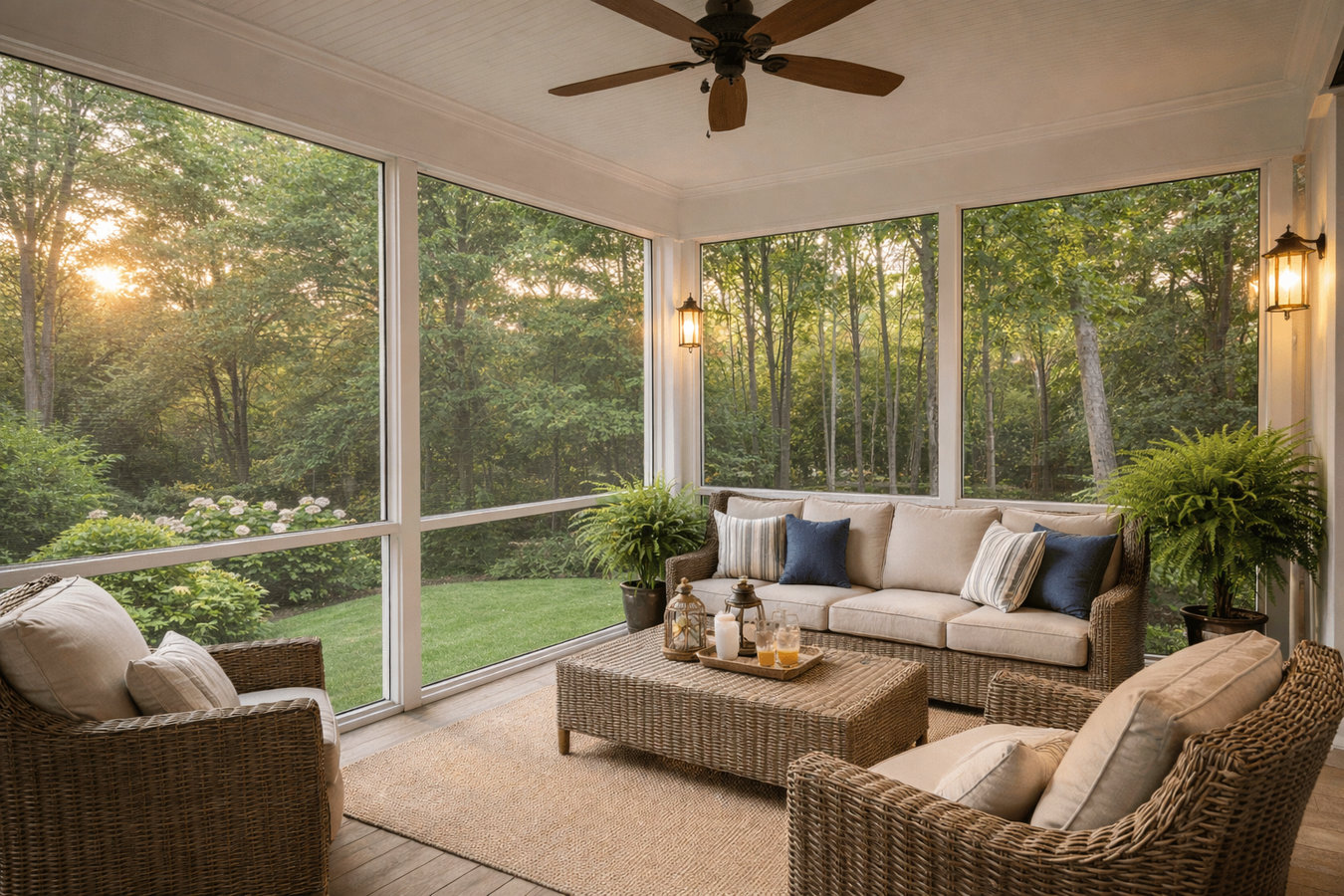
A properly built screen room lets Palm Coast homeowners use their outdoor space eight to ten months a year - without mosquitoes, afternoon downpours, or the heat of open sun. We build them to Florida's coastal wind standards, fully permitted.
Screen room installation in Palm Coast involves building an aluminum-framed outdoor enclosure with screen mesh panels over an existing patio slab or new foundation - permitted through the City of Palm Coast, with most projects completed in three to seven business days of active work once permits are in hand.
A screen room is different from a sunroom: it uses open mesh panels that let air flow freely instead of glass, which means no air conditioning costs and a fraction of the price. In Palm Coast's climate, that trade-off makes sense for most homeowners. You can use the space comfortably for eight to ten months of the year without ever turning on a cooling system. The bugs, the afternoon thunderstorms, and the worst of the direct sun are managed by the screen and roof panels - you get the feel of being outside without the things that make Palm Coast's outdoor season frustrating. For homeowners who want a fully enclosed, climate-controlled space, our patio-to-sunroom conversion service covers that option in detail.
Every screen room we install in Palm Coast is permitted through the city. That permit means a city inspector reviews the finished work before you sign off - an independent check that the framing is properly anchored, the roof is connected correctly, and the structure meets Florida's wind requirements for this coastal region. A screen room installed without a permit can create real problems at resale and may not be covered if a storm damages it.
If your outdoor furniture sits covered from late spring through early fall because the mosquitoes and no-see-ums make the patio miserable after dark, a screen room is exactly what changes that. Palm Coast's warm, humid summers bring heavy insect pressure, and an open patio offers no protection. A screen room lets you sit outside comfortably even on evenings when the bugs are at their worst.
If you bought a Palm Coast home with an existing screen room and you are noticing rust streaks on the frame, torn screen panels, or door hardware that sticks and will not latch, the structure may be at the end of its useful life. Older enclosures - especially those built before Florida tightened its wind-resistance requirements - may not meet current standards and could be a liability in a storm. A contractor can tell you quickly whether repair or full replacement makes more financial sense.
If water pools on your existing patio slab after a heavy rain and takes hours or days to drain, adding a screen room with a proper roof and improved drainage design can actually help solve that problem. Many Palm Coast lots sit on flat terrain where water has nowhere to go quickly, and a well-designed screen room roof redirects rainwater away from the slab. This is worth discussing with a contractor who knows how water moves in your specific neighborhood.
If you are thinking about putting your Palm Coast home on the market, a permitted screen room is one of the outdoor improvements that consistently appeals to Florida buyers. Buyers relocating from northern states often specifically look for homes with screened outdoor living space because they know how much they will use it. A screen room built with a permit and inspected is also a cleaner disclosure than an unpermitted structure.
Every screen room we install in Palm Coast starts with the same foundation: aluminum framing anchored to your home and slab, a roof system that sheds rainwater away from the structure, and screen mesh panels that are stretched and fastened tightly so they stay flat and do not sag. From there, the variables are size, roof style, door placement, and screen mesh weight. Heavier mesh blocks more sun and holds up better against pets or debris; lighter mesh maximizes airflow and natural light. We walk you through those trade-offs at the estimate so you are choosing based on how you actually plan to use the space. All hardware we use is rated for coastal conditions - stainless steel or marine-grade throughout - because standard screws and hinges corrode quickly in Palm Coast's salt air environment. For homeowners whose existing patio is showing its age or who want to step up to a fully enclosed space, our patio-to-sunroom conversion service covers what that upgrade involves, and our patio enclosures service explores options for homeowners who want something between a basic screen room and a fully climate-controlled sunroom.
We manage the City of Palm Coast permit process as part of every installation - application, inspection scheduling, and final sign-off are included in the project scope. For homeowners in HOA communities, we prepare the architectural review submission and coordinate that process alongside the city permit so both approvals are in hand before any framing goes up. The Florida Home Builders Association maintains standards for residential enclosure work in the state - we build to those standards on every project.
Best for homeowners who have a poured patio in good condition and want to enclose it with a proper roof and screen panels - the most common and cost-effective starting point.
Best for homeowners who do not have an existing patio, or whose current slab is cracked or uneven and needs to be replaced before framing can begin.
Best for homeowners with an older screen room that has corroded hardware, torn panels, or framing that no longer meets current Florida wind standards - full tear-out and rebuild on the existing slab footprint.
Best for homeowners with a structurally sound frame that needs fresh screen panels and updated door hardware - a lower-cost option when the bones of the enclosure are still in good shape.
Palm Coast averages around 230 sunny days per year and mild winters, which means homeowners here use outdoor living spaces far more than homeowners in most of the country. That makes a screen room a genuinely practical investment rather than a luxury. For most Palm Coast families, a screen room becomes a primary dining space, a place for kids to play after school, and the room where guests gather in the evenings - used for eight to ten months of the year without any air conditioning costs. The city was built largely during the ITT development era of the 1970s and 1980s, and many of those original screened porches have either deteriorated or were built to lower standards than what Florida's building code now requires. A new installation brings those spaces up to current wind and structural standards. Homeowners in Ormond Beach and across the broader northeast Florida coast are finding that a well-built screen room - permitted and inspected - adds genuine value and everyday usability to their homes.
Palm Coast's proximity to the Atlantic coast and the Intracoastal Waterway means salt air is a real factor in how outdoor structures age here. Standard hardware corrodes within a few years when it is not rated for coastal exposure - which is why we use stainless steel and marine-grade fittings on every installation. The flat terrain common in Palm Coast also creates drainage challenges that a properly designed screen room can either solve or make worse, depending on how the roof pitch and slab elevation are handled. A contractor who has worked in this specific area knows to account for these conditions; one who has not may miss them entirely. Families near Flagler Beach face the highest salt air exposure and should pay particular attention to hardware specifications when comparing quotes.
When you call or submit a request online, we ask a few basic questions - the size of your existing patio, whether you have an HOA, and what you plan to use the space for. This helps us arrive at your home prepared. We respond to all inquiries within one business day.
We come to your home, measure the space, and check how the roof will connect to your house, where the doors will go, and whether the existing slab is in good enough shape to build on. You leave this visit with a written quote that breaks down exactly what is included and what it costs.
If your neighborhood has an HOA, we help you prepare the design submission and get written approval before anything else happens. Once that is in hand, we pull the City of Palm Coast building permit. Permit review typically takes one to three weeks - it is protecting your investment, not slowing things down.
The crew sets the aluminum frame, attaches it to your home and slab, installs the roof panels, and then stretches the screen mesh into place. Most projects take three to seven business days. After the city inspector passes the work, we walk you through the finished room and give you the inspection record for your files.
Free on-site estimates with no obligation. We handle permits and HOA submissions so you can focus on how you want to use the space.
(386) 529-0883Standard screws, hinges, and door latches corrode within a year or two in Palm Coast's salt air environment - especially near the Intracoastal Waterway and the coast. We use stainless steel or marine-grade hardware throughout every screen room we build. That is not an upgrade option; it is how we build here because we know what happens when it is skipped.
Palm Coast is in a coastal wind zone, and screen rooms must be engineered to specific wind-load requirements under Florida's building code. We use heavier-gauge aluminum framing and proper anchoring methods that meet those standards. A screen room that is not built to Florida's wind requirements is not just a code violation - it is a structure that may not survive the first serious storm. The Florida Building Commission sets the floor; we build to it on every project.
The City of Palm Coast requires a permit for every screen room installation, and a significant portion of Palm Coast neighborhoods also require HOA approval before exterior work begins. We handle both processes as part of the project scope - preparing the documents, submitting the applications, and scheduling the city inspection. You do not have to navigate any of that on your own.
Much of Palm Coast sits on flat, low-lying terrain where standing water after heavy rain is common. We assess how water moves across your specific lot before finalizing the roof pitch and slab elevation so the screen room improves drainage rather than making it worse. This is local knowledge that matters - a contractor who does not know Palm Coast's terrain may skip it entirely.
Screen room installation in Palm Coast requires getting the permit, the HOA approval, the hardware selection, and the structural anchoring right - all before any framing goes up. We handle each of those pieces as a standard part of every project, so there are no gaps in the process that come back to you later.
For homeowners who want a fully enclosed, climate-controlled room rather than an open-air screen enclosure - a step up that adds conditioned living space to your home.
Learn MoreExplore the range of enclosure options between a basic screen room and a fully glazed sunroom - including hybrid designs that suit Palm Coast's mild winter climate.
Learn MoreSpring and fall are our busiest seasons - contact us now to lock in your start date and get a free written quote.