
Loading...
Serving Palm Coast, FL and surrounding areas. (386) 529-0883
Palm Coast Lanai Sunrooms & Patios builds four season sunrooms, screen enclosures, and patio additions for Daytona Beach homeowners across Volusia County. We handle city permits, spec materials for beachside conditions, and respond within one business day.
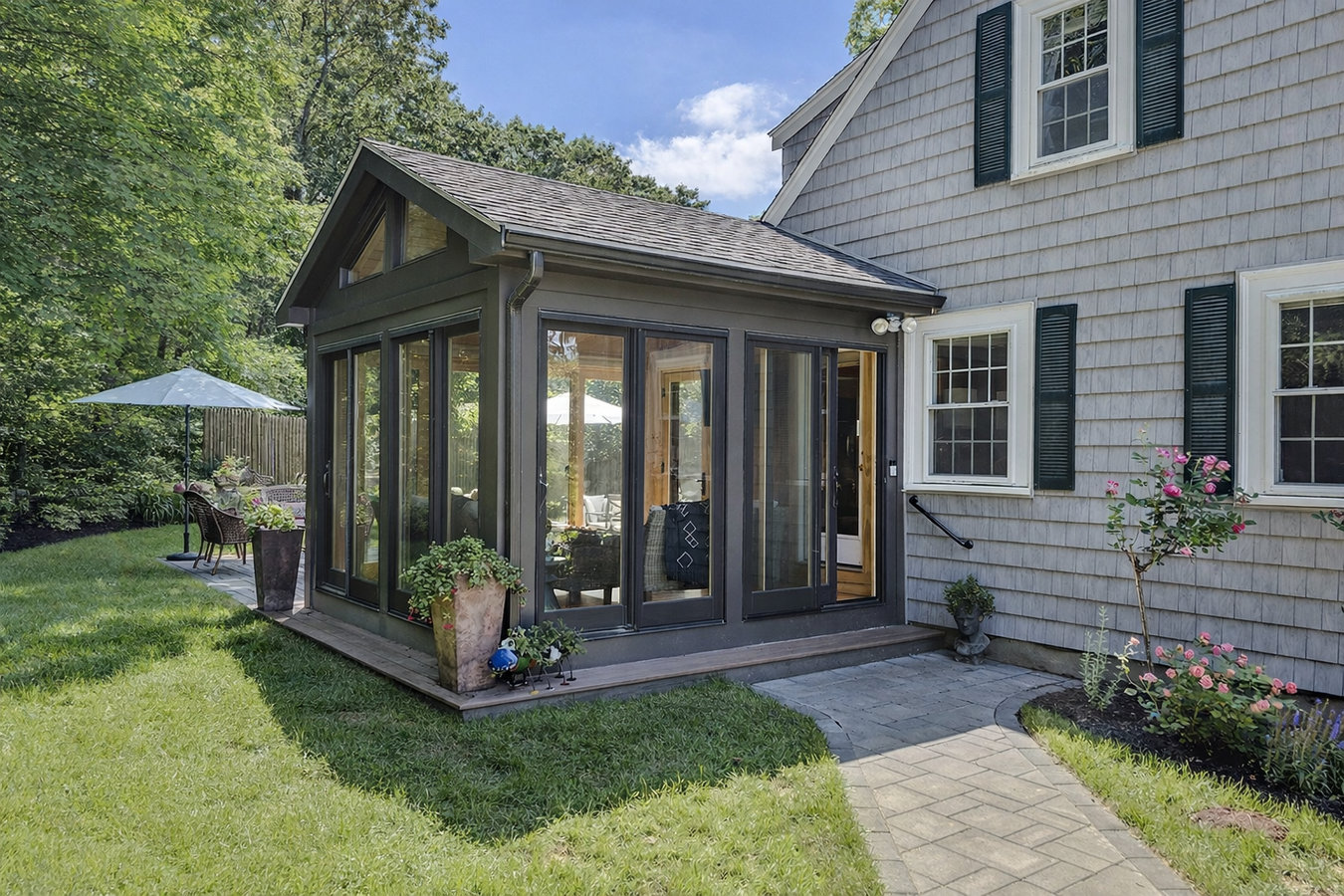
Daytona Beach summers are hot and humid enough to make an unconditioned sunroom uncomfortable for nearly five months of the year. A four season sunroom with insulated glass and a connection to your home's HVAC system gives you a genuinely usable space year-round - whether you are watching a summer storm roll in off the Atlantic or enjoying a cool December morning with the windows open.
Daytona Beach's location between the Halifax River and the Atlantic means mosquitoes and no-see-ums are active from early spring through late fall. A properly built screen enclosure is the most cost-effective way to reclaim your back porch for most of the year, and on beachside properties we specify corrosion-resistant hardware that stands up to salt air far better than standard residential aluminum.
Many Daytona Beach homes from the 1960s and 1970s have covered back areas or carports that were never properly enclosed. Adding a conditioned sunroom to an existing slab is one of the most efficient ways to add usable square footage to an older home in this area without the cost of a full room addition from the ground up.
Daytona Beach gets heavy afternoon thunderstorms almost daily from June through September - an open patio takes the full brunt of that weather season after season. Enclosing the space with glass or screen panels gives you a dry outdoor room during the wet season and adds a practical buffer against the city's frequent wind events during fall storm season.
Daytona Beach has a lot of homes with existing screened or roofed patios that owners want to upgrade into something more weatherproof and year-round useful. Converting an existing patio structure into a fully enclosed sunroom is often more affordable than starting from scratch, because the slab and some framing are already in place.
A solid or louvered patio cover is the simplest and fastest way to make an outdoor slab usable during Daytona Beach's intense spring and summer sun. It also protects the concrete from the repeated saturation and drying that leads to surface cracking on older slabs - a common issue on Daytona Beach properties that have been through decades of wet seasons.
The bulk of Daytona Beach's housing stock was built between the 1950s and 1980s using concrete block construction - the CBS (concrete block stucco) method that was standard across Florida during that era. These homes are generally durable, but after 40 to 60 years of Florida heat, humidity, and hurricane seasons, the exterior stucco and block can develop cracks that allow moisture into the wall cavity. Any contractor attaching a new structure to one of these homes needs to inspect those attachment points carefully. A screwed-in ledger board on a wall that has unseen moisture damage is a structural problem waiting to happen, and it is not something that shows up on a quick walkthrough.
The city also sits on flat, low-lying land bordered by the Halifax River to the west and the Atlantic to the east. Much of the area east of US-1 falls within FEMA-designated flood zones. Flat lots and shallow water tables mean drainage needs to be considered before pouring any new concrete or anchoring any new footings. On top of that, beachside properties face accelerated wear from salt air on every metal component - frames, fasteners, and hardware all need to be specified for coastal conditions, not interior Florida conditions. These are the kinds of site-specific decisions that matter for a structure that is expected to last 20 or 30 years in this climate.
Our crew works throughout Daytona Beach regularly, and we understand the local conditions that affect sunroom contractor work here. We pull permits through the City of Daytona Beach Building Services Department and know what the review and inspection process looks like for attached structures on the variety of older and newer construction spread across the city.
Daytona Beach has some of the most recognizable landmarks in Florida - the Daytona International Speedway on the west side of the city and the Boardwalk and Main Street Pier at the heart of the beachfront. Homes near the Speedway corridor tend to be mid-century concrete block ranches with modest lots. The Midtown neighborhoods farther west have a similar character - mostly postwar single-family homes that have been owner-occupied for decades and benefit from the kind of careful, site-specific work that aging construction requires. Beachside properties along Atlantic Avenue and the barrier island are a different situation entirely, with salt-air exposure that requires a different materials conversation before any work begins. We also work regularly with property owners who manage rental units, where fast turnaround and clean workmanship matter because the property needs to be occupied again quickly.
We serve homeowners throughout this corridor, including in South Daytona just south of the city and in Holly Hill to the north. These communities share the same soil conditions, hurricane exposure, and housing stock as Daytona Beach itself, so the work looks familiar no matter which side of the city line a project is on.
Contact us by phone or through our online form and we will follow up within one business day. It helps to know your general location in Daytona Beach - beachside, near the Speedway, or in Midtown - because materials and site prep considerations vary meaningfully across those areas.
We visit your Daytona Beach property to look at the existing slab, wall condition, drainage situation, and any flood zone or salt-air factors before giving you a price. This is also where we walk through material options and discuss what a realistic budget looks like for your specific home and goals.
We submit the permit application to the City of Daytona Beach Building Services Department and keep you updated through the review process, which typically runs two to four weeks. Once approved, we schedule construction and manage all required inspections through to closeout.
When work is complete, we do a final walkthrough with you to confirm everything meets your expectations and all inspections have passed. You receive the permit closeout documentation - important to keep on file for your insurer and for any future sale of the property.
We serve all of Daytona Beach - from beachside properties along Atlantic Avenue to the neighborhoods near the Speedway and Midtown. Call or submit a request and we will respond within one business day.
(386) 529-0883Daytona Beach is the largest city in Volusia County, with a population of roughly 69,000 year-round residents and a character shaped equally by its motorsports identity and its beachfront location. The city is home to the Daytona International Speedway, the site of the Daytona 500 and one of the best-known racing venues in the world. Bike Week every March brings hundreds of thousands of visitors to the area, and Speedweeks in February is another event the whole city organizes around. But outside of those big weeks, Daytona Beach is a working city - Halifax Health and Embry-Riddle Aeronautical University are two of the largest employers, and many residents are long-term homeowners who have lived in their neighborhoods for decades. For more background on the city's history and neighborhoods, the Daytona Beach Wikipedia article covers the development of the city from its early resort and racing era through its current mix of residential, commercial, and tourism uses.
The city spans from the Atlantic beachfront on the barrier island, across the Halifax River (the Intracoastal Waterway), through the older residential neighborhoods west of US-1, and out toward the Interstate 95 corridor where newer commercial and residential development has expanded in recent decades. Beachside neighborhoods have the highest density of older homes and rental units, while the mainland neighborhoods - Midtown, the areas near the Speedway, and neighborhoods close to the Halifax Health Medical Center campus - tend to have more owner-occupied single-family homes. We also serve homeowners in neighboring Ormond Beach to the north, which shares the same coastal climate and housing conditions as the northern Daytona Beach neighborhoods just across the city line.
Keep bugs out and breezes in with a professionally installed screen room.
Learn MoreGlass solarium installations that flood your home with natural light.
Learn MoreDurable patio cover installations for shade and all-weather protection.
Learn MoreFour season sunrooms, screen enclosures, patio covers - we build them all in Daytona Beach and respond within one business day. Call now or request a free estimate online.