Loading...
Serving Palm Coast, FL and surrounding areas. (386) 529-0883
Palm Coast Lanai Sunrooms & Patios builds sunroom additions, patio enclosures, and screen rooms for Palm Coast homeowners - permitted, inspected, and built to Florida's wind standards, with crews who have worked throughout Flagler County.
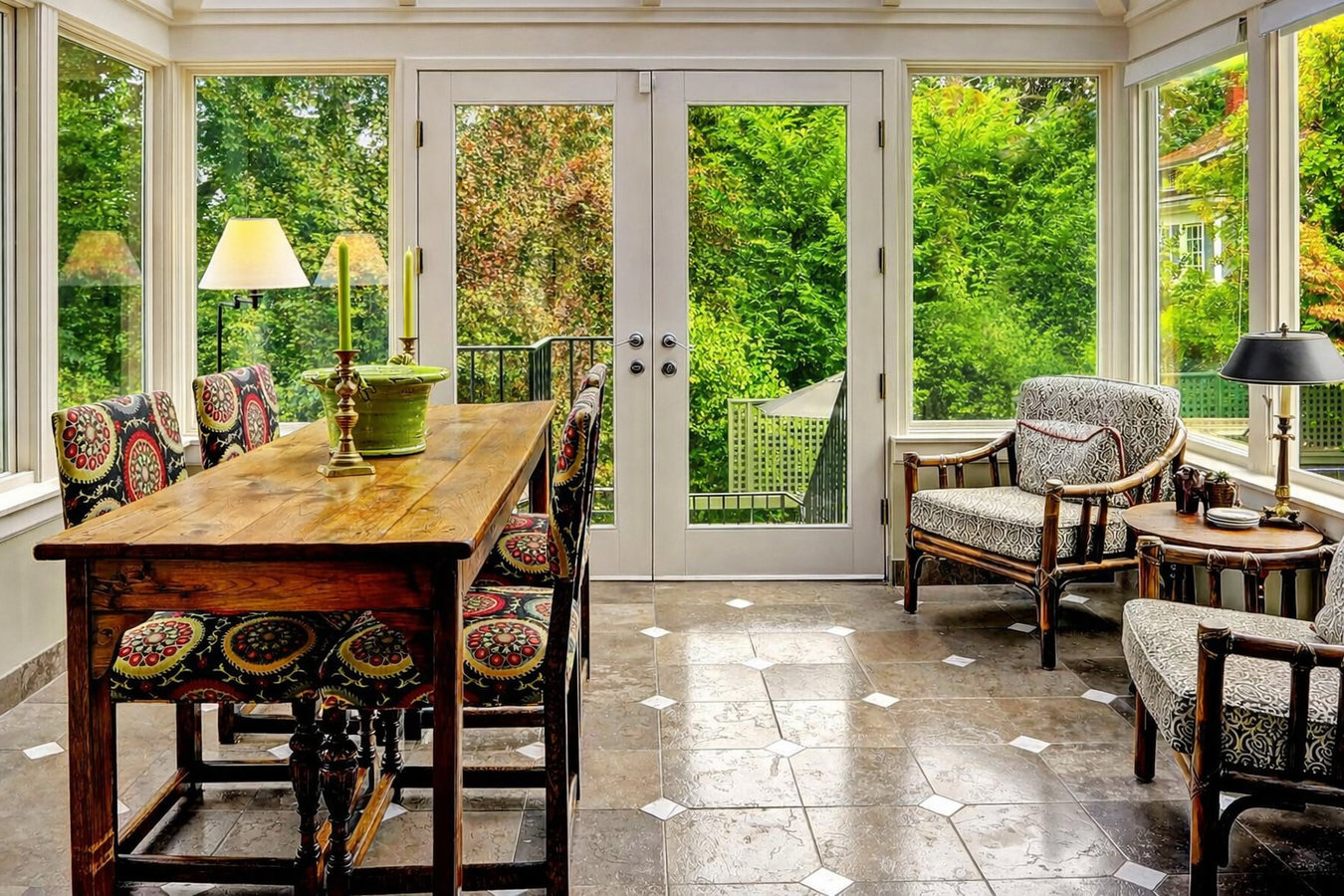
Palm Coast homes built during the 1970s and 1980s ITT development push often have screened lanais that homeowners are ready to convert into climate-controlled living space. Our sunroom additions are built to Flagler County's permit requirements and Florida's wind-load standards, so the room holds up through every hurricane season.
Palm Coast's afternoon thunderstorms and relentless mosquito season make open patios hard to use from June through October. A properly built patio enclosure - screened or fully glazed - gives you back those months without the bugs, the rain, or the brutal afternoon sun. We handle the Flagler County permit and any HOA submission.
Screened rooms are a practical first step for Palm Coast homeowners who want bug protection and shade without full climate control. We install aluminum-framed screen rooms anchored to meet Florida's high-wind requirements, so a summer storm does not undo what you paid for.
Canal-front and wooded lots throughout Palm Coast feel different at every hour of the day, and a four season room lets you take in that view comfortably every month of the year. Insulated walls and windows rated for Florida's solar load keep the room cool in summer and comfortable during brief winter cold snaps.
Homes across Palm Coast vary - from modest ranch houses in the older lettered sections to newer construction near Grand Haven. Custom sunroom design lets us match the room's roofline, materials, and footprint to what your specific property needs rather than forcing a generic kit into a space it was not designed for.
Many Palm Coast homes already have a concrete slab off the back - a covered patio that is neither comfortable enough to use regularly nor enclosed enough to be a real room. Converting that existing footprint into a finished sunroom is often faster and less disruptive than building from scratch, since the slab work is already done.
Most homes in Palm Coast were built between the 1970s and the 1990s during the ITT Community Development Corporation's master-planned buildout. That means the bulk of the city's housing stock is now 30 to 50 years old - squarely in the window where screened lanais, patio slabs, and outdoor structures need attention. Sandy soil throughout Flagler County shifts under concrete over time, and the combination of high humidity, seasonal flooding along the canal network, and annual hurricane exposure accelerates wear on any outdoor structure.
Florida's building code requires all attached sunrooms and enclosures to meet strict wind-load standards - this is not optional and it matters. A contractor who has worked in Palm Coast understands how Flagler County's Building Services department reviews permits, knows what HOA architectural review looks like in communities like Grand Haven and Palm Harbor, and understands how to anchor a structure into sandy soil without it shifting in three years. Those details are why local experience matters more than the lowest bid.
Our crew works throughout Palm Coast regularly, and we pull permits through Flagler County Building Services for projects across the city - from the older lettered neighborhoods off Palm Coast Parkway to newer communities near the Intracoastal Waterway. The canal maintenance challenges the city manages through its stormwater department are something we see on job sites regularly - elevated moisture near canals means anchoring and foundation prep have to account for conditions that do not apply to drier lots.
Palm Coast is a city of single-family concrete block homes on modest lots, many of them backing up to the freshwater canal network that defines the city's layout. Whether a property is near Washington Oaks Gardens State Park on the south end, out toward Town Center off Palm Coast Parkway, or in one of the newer gated communities, each neighborhood has its own character and its own HOA rules to navigate. We know how the permitting process works here, what inspectors look for at each stage, and how to keep a project on schedule even when permit review takes the full four-week window.
We also serve homeowners in Flagler Beach - just a few miles east on the Atlantic coast - where the salt air and coastal exposure create a different set of material requirements than inland Palm Coast neighborhoods. Working across both communities means we understand the full range of conditions in Flagler County.
We respond within one business day. You will hear from us directly - not a call center - and we will ask a few basic questions about your home, your HOA situation, and what you are hoping to build before scheduling a visit.
We visit your property, measure the space, check the existing slab or foundation, and walk through your options in person. This visit is free. You will leave it with a realistic price range and a clear picture of what is possible - not a vague promise to email something later.
We submit the permit application to Flagler County Building Services and prepare your HOA architectural review documents if needed - both at the same time so approvals run concurrently. County review typically takes two to four weeks. You do not visit any offices or fill out any forms.
Once permits are in hand, construction runs two to five weeks depending on scope. We schedule all county inspections - you do not chase anything down. After the final inspection passes, we do a walkthrough with you and leave you with your permit documents on record.
We serve Palm Coast and all of Flagler County. Free estimates. No pressure.
(386) 529-0883Palm Coast is Flagler County's largest city and one of Florida's fastest-growing communities, with a population that has grown from just over 32,000 in 2000 to well over 90,000 today. The city was developed starting in the early 1970s by ITT Community Development Corporation as a master-planned community, and that heritage is visible in the city's layout - a grid of residential sections identified by letters, each with its own streets, canals, and neighborhood character. Most homes are single-story concrete block construction with stucco exteriors, sitting on modest lots in wooded or canal-front settings. You can read more about the city's origins on the Palm Coast Wikipedia article.
Landmarks like Washington Oaks Gardens State Park along the Matanzas River and the Town Center district off Palm Coast Parkway anchor the community, while newer developments like Grand Haven and the Hammock area have added higher-end homes and more recent construction to the mix. Palm Coast borders Flagler Beach to the east and is surrounded by protected natural land to the west and south, giving many neighborhoods a wooded, semi-rural feel even within city limits. Homeowners throughout Palm Coast also have neighbors in Flagler Beach just to the east, where coastal conditions shape a somewhat different set of home improvement priorities.
Keep bugs out and breezes in with a professionally installed screen room.
Learn MoreGlass solarium installations that flood your home with natural light.
Learn MoreDurable patio cover installations for shade and all-weather protection.
Learn MoreEvery project is permitted through Flagler County. Estimates are free and there is no obligation to book.