Loading...
Serving Palm Coast, FL and surrounding areas. (386) 529-0883
Most Palm Coast homeowners want more light and more living space, but end up with a room that bakes in July. Good sunroom design starts with the right glass, the right roof, and a plan built for Florida's heat and storm season.
Sunroom design in Palm Coast covers every decision that shapes how comfortable, livable, and storm-ready your room will be - including glass selection, roof style, foundation approach, HOA submission, and Flagler County permitting - with most finished projects taking eight to sixteen weeks from contract signing to move-in day.
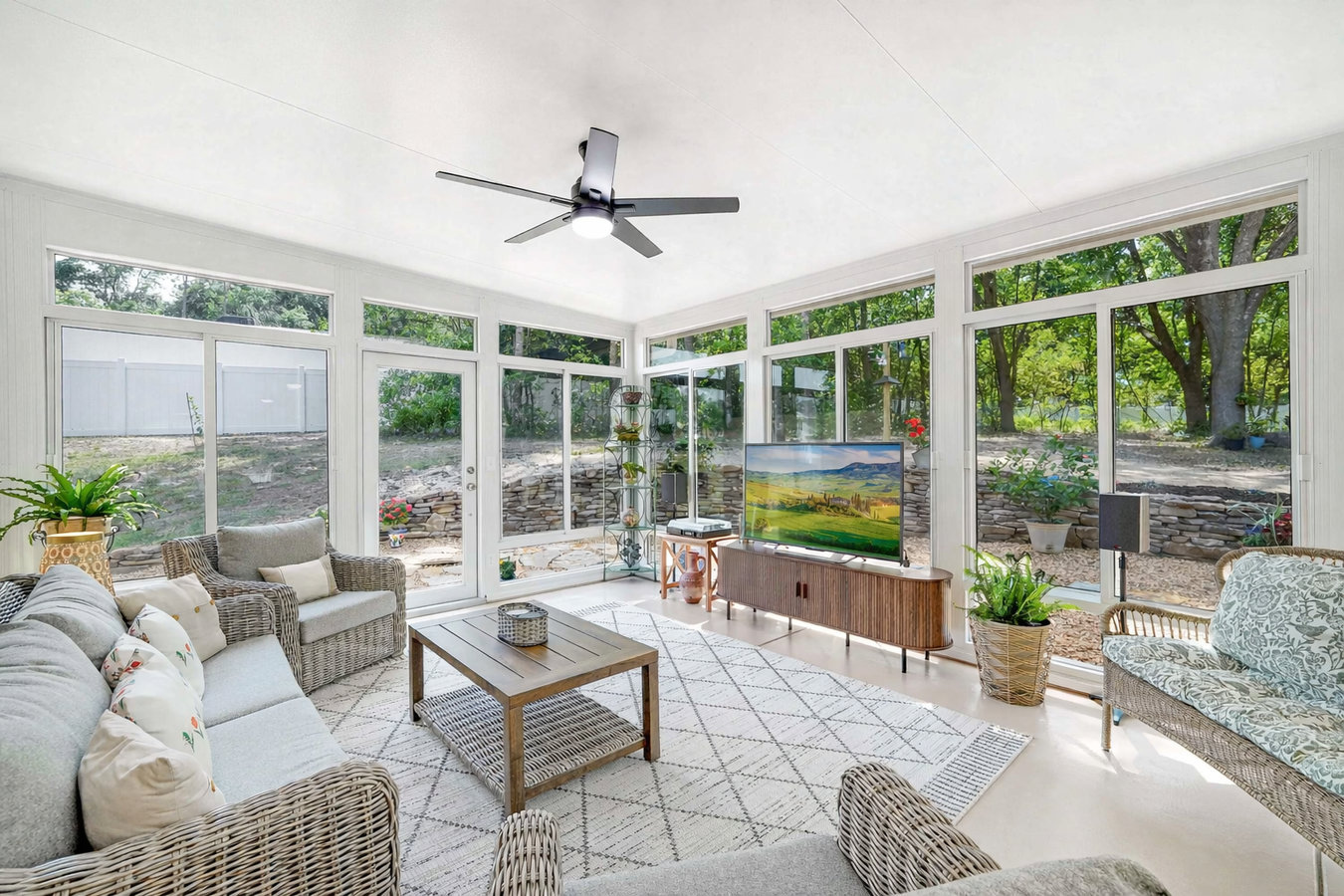
A well-designed sunroom does not feel like a box stuck on the back of your house. It matches your roofline, uses materials that hold up in Palm Coast's humidity and coastal storms, and has glass chosen specifically to keep the heat out. In a city where summers run from May through October, the design phase is where you decide whether this is a room you love or one you avoid for half the year. If you are also thinking about enclosing an existing porch or patio first, our custom sunrooms page covers how we approach fully tailored builds from scratch.
Every design consultation starts with a visit to your home. We look at where the room attaches to your house, check the yard and foundation conditions, ask about your HOA if you have one, and talk through how you plan to use the space before we put any numbers on paper.
If your back porch sits empty from May through September because it is too hot to use, that is one of the clearest signs your current outdoor space is not working. A properly designed sunroom with climate control and heat-blocking glass changes that - giving you a comfortable room for all twelve months rather than just the four mild ones that Palm Coast gets.
Many of Palm Coast's older neighborhoods were built with smaller rear windows and less emphasis on indoor-outdoor connection. If the back rooms of your house feel dim and disconnected from the yard, a sunroom addition with glass on three sides can change how your whole home feels day-to-day - without a full interior renovation.
If your current screened enclosure or porch has frames pulling away from the house, a sagging roof, or water stains appearing inside after rain, patching it repeatedly costs more over time than replacing it with a properly engineered room. Florida sun, salt air, and storm exposure accelerate wear on outdoor structures faster than most homeowners expect.
If your family has outgrown your indoor square footage but a traditional room addition feels like too large a project, a sunroom is often faster, less disruptive, and more cost-effective. It can function as a home office, a reading room, or an extra sitting area - and in Palm Coast's active real estate market, a well-designed permitted sunroom is a genuine selling point.
Our sunroom design process covers the full range of decisions that determine whether your room is comfortable and durable for the long term. That starts with the glass - we specify low-e coated glass that blocks the sun's heat while still bringing in natural light, which in Palm Coast's climate is the difference between a room you want to be in and one you avoid. Roof style is another major decision: a solid insulated roof keeps the space cooler and reduces glare; a glass or polycarbonate ceiling lets in more light but can make the room significantly hotter in Florida's sun. We walk you through both options and explain the real-world tradeoffs for your specific situation. For homeowners interested in a completely tailored approach, our vinyl sunrooms page covers the specific frame and panel system options that work well in this climate.
Foundation design is part of every proposal we write. Much of Palm Coast is built on sandy soil with a water table that sits close to the surface in neighborhoods near the Intracoastal Waterway and the canal network - that means foundation design deserves more attention here than it would in other parts of the country. We also handle HOA submission and Flagler County permitting from start to finish, so those steps do not fall on your shoulders. For homeowners already considering a broader scope of work, our custom sunrooms page covers fully tailored builds with unique rooflines, flooring, and architectural details.
Best for homeowners who want a light-filled sitting area for Palm Coast's mild months and are comfortable treating the space as a seasonal room rather than year-round living space.
Best for homeowners who want a fully climate-controlled room they can use every day of the year - the right choice for most Palm Coast homeowners given the length and intensity of summer.
Best for homeowners with an existing screened enclosure who want to upgrade to glass walls, a solid roof, and climate control without tearing the whole structure down.
Best for homeowners starting with bare backyard space who want a room designed from the ground up to match their home's roofline, exterior finish, and layout.
Palm Coast averages over 230 sunny days per year, and summer humidity regularly runs into the 80 to 90 percent range. A sunroom designed without serious attention to heat-blocking glass and ventilation will be unusable for most of the year - not just uncomfortable, but genuinely too hot to sit in. Flagler County also falls within Florida's coastal wind zone, which means every window, door, and roof connection in your sunroom must be rated for significant wind loads. That is not optional - it is part of the permit and inspection process. Homeowners in Flagler Beach face the same requirements and the same climate conditions, and we design and build in that area regularly.
Most of Palm Coast's housing stock was built between the 1970s and the 1990s during the ITT development era, using concrete block construction with stucco exteriors. Attaching a sunroom to a concrete block wall requires specific anchors, flashing details, and foundation approach that differ from wood-frame homes - and getting those details right is what keeps water out of your wall cavity for the long term. Homeowners in Bunnell and nearby communities share the same construction era and face the same site-specific considerations.
When you reach out, we collect basic information - your home address, the general size of the space you have in mind, and how you plan to use the room. We respond within one business day and schedule a site visit at a time that works for you, with no commitment required.
We visit your home to measure the space, assess the yard and foundation conditions, check your HOA status, and talk through design options. This is where we discuss glass type, roof style, size, and how the room connects to your existing living areas. No quote is given before this visit.
Once you approve the proposal, we handle HOA submission if your neighborhood requires it, and then submit the permit application to the Flagler County Building Department. Permit review typically adds two to four weeks - we manage the process and keep you updated at every step so you do not have to chase anyone.
With permits approved, the crew begins foundation work, framing, window and door installation, and roofing. County inspections happen at multiple stages - your contractor schedules these. Once the inspector signs off, we walk through the finished room with you, demonstrate how everything operates, and hand you copies of all permit records.
We visit your home, walk through every design decision, and give you a detailed written proposal - no pressure, no commitment.
(386) 529-0883Every proposal we write specifies heat-blocking glass, wind-rated connections, and roof materials chosen for Palm Coast's sun, humidity, and storm season. A room designed generically for a national market is a room that underperforms here.
The U.S. Department of Energy recommends low-e glass for hot climates - we specify it as standard on every Palm Coast sunroom design.
Navigating Flagler County's Building Department requires engineered drawings, specific documentation, and familiarity with the local review process. We submit the application, respond to reviewer questions, and keep you updated - you do not have to follow up with the county yourself.
Permit records protect your investment if you ever sell or make an insurance claim - we ensure every project closes with a final inspection on file.
Palm Coast has a large number of planned communities with active HOAs, including areas around Grand Haven and the Hammock. We are familiar with the submission requirements of communities across the city and can help you prepare a package that gets approved the first time - avoiding costly redesigns or missed meetings.
Every proposal we deliver spells out exactly what is included, what materials are specified, and what would trigger a change in price - before you commit to anything. The number you agree to at signing is the number you pay at the end.
You can verify any Florida contractor's license at any time through the Florida DBPR online lookup tool.
Every project we take on starts with a real site visit and ends with a closed permit on record. If you have questions about sunroom design for your Palm Coast home, we are happy to talk through the options before you commit to anything.
Low-maintenance vinyl-framed enclosures built for Palm Coast's humidity, salt air, and storm season - no painting, no rust.
Learn MoreFully tailored builds with unique rooflines, floor plans, and finishes designed around your home and how you want to live in it.
Learn MorePermit slots fill up fast in Flagler County - reach out now to lock in your project start date before the next wave of applications hits the building department.