Loading...
Serving Palm Coast, FL and surrounding areas. (386) 529-0883
You want natural light and a connection to your backyard without the heat, bugs, and storms. We build custom solariums in Palm Coast with the right glass, the right permits, and a design that stays comfortable even in July.
Solarium installation in Palm Coast creates a glass-walled, fully enclosed room built on a concrete slab foundation with impact-rated glazing and a transparent roof - permitted through Flagler County, with most projects completed in three to six weeks of construction once permits are approved.
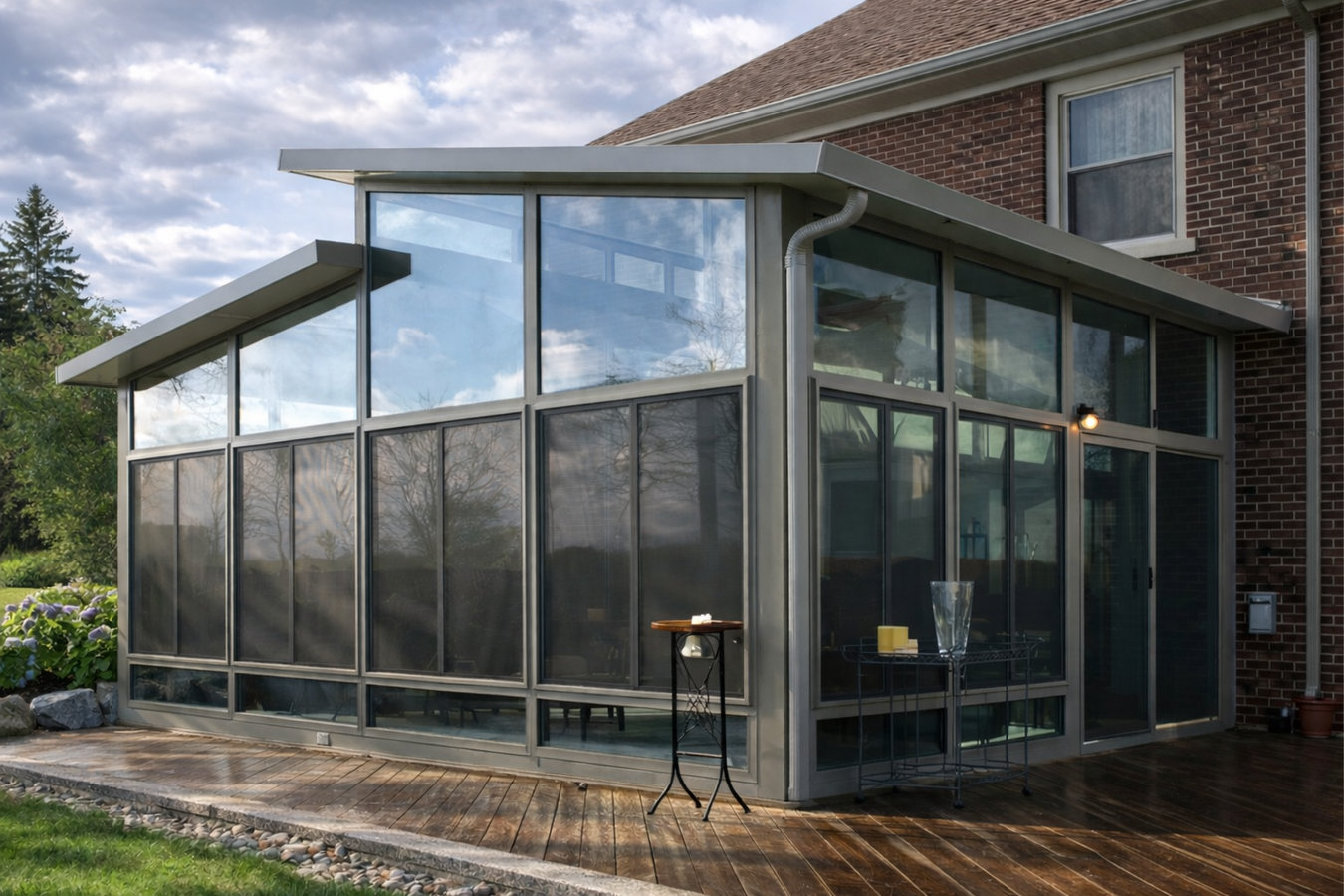
A solarium differs from a standard sunroom in one key way: the walls and often the ceiling are primarily glass or transparent panels rather than insulated wall sections with windows. That distinction brings in dramatically more light, which is why homeowners choose them - but it also means glass selection is the most important decision you will make. In Palm Coast, where summer sun is intense and hurricane season is real, the glazing system has to handle both. Homeowners who want maximum light with a glass roof will want to compare solarium options with our custom sunrooms page, which covers designs with a mix of glass and solid walls.
Every solarium we build in Palm Coast goes through the full Flagler County permit and inspection process - foundation, framing, and final. That record protects your homeowner's insurance coverage, documents the added square footage, and makes the addition a genuine asset rather than a liability at resale. Contractors who skip permits are cutting a corner that you end up paying for later.
If you love the idea of sitting with your coffee watching the backyard but the Florida heat and humidity make it miserable by 8 a.m., that is a clear sign a solarium could change how you use your home. Palm Coast's subtropical climate limits outdoor living for much of the year. A solarium gives you the light and the view without the heat, the bugs, or the afternoon thunderstorms.
Many Palm Coast homes were built with screened enclosures that work beautifully from October through April but become sweltering or rain-soaked the rest of the year. If you find yourself avoiding that space from May through September, converting it to a fully enclosed solarium - or adding one in its place - is worth exploring. With proper glass and climate control, that space becomes usable every month.
If there is a corner of your house that never gets natural light, feels cut off from the rest of the living area, or just does not get used, a solarium addition can transform how the whole back of the house feels. Natural light has a measurable effect on how spacious a home feels - and in a sunny place like Palm Coast, it is a resource worth capturing rather than blocking out.
A solarium is one of the most versatile rooms you can add to a home - it works as a plant room, a reading room, a yoga space, or a bright guest area. If you have been wishing for a room that does not quite fit anywhere in your current floor plan, a solarium addition is often the most practical way to create it. The light levels that work so well for plants also make it an appealing space for people.
Every solarium project starts with a site visit to assess where the room will connect to your home, what the foundation conditions are, and how the sun moves across the space throughout the day. In Palm Coast, where sandy coastal soil has lower load-bearing capacity than clay or compacted fill, the foundation engineering is one of the most important parts of the job. From there, the main design choices involve the glazing system - full glass walls with a glass roof for maximum light, or a combination of glass panels with insulated sections that give you more thermal performance on the walls that face the afternoon sun. HOA approval is a real step in many Palm Coast neighborhoods, and we handle that submission before a permit application goes in.
For homeowners comparing options, our patio cover installation page covers covered-but-open outdoor structures at a lower cost point, and our custom sunrooms page covers fully insulated rooms with standard wall sections - a better fit for homeowners who want maximum thermal performance over maximum light.
Best for homeowners who want maximum natural light and a room-size greenhouse effect for plants, reading, or a bright sitting space - with low-e glass to manage heat.
Best for homeowners who want abundant light but need more thermal control on sun-facing walls - combining glass panels with insulated solid sections.
Best for homeowners who want overhead natural light - a true greenhouse-style ceiling - built with impact-rated panels that meet Florida's coastal wind requirements.
Best for Palm Coast homeowners who already have a screened lanai frame and want to upgrade it to a fully enclosed, climate-controlled glass room without tearing everything down.
Palm Coast averages around 233 sunny days per year, which sounds like a reason to build a glass room and enjoy all of it - and it is, if the room is designed correctly. Without heat-reflective low-e glass and a proper HVAC plan, a solarium in this climate becomes unusable from May through September, no matter how beautiful it looks. The glass specification and the cooling plan are not details to sort out after the contract is signed. They are the core of the design, and a contractor who has built in Flagler County knows to address them before the first drawing goes out.
Sandy soil conditions throughout Palm Coast also affect how the foundation has to be engineered - this is not the same job as building on clay or compacted fill. Homeowners in Flagler Beach and in St. Augustine Beach face the same coastal soil and wind zone requirements, and our crews have worked in all of these areas. The permit requirements in Flagler County, including the HOA architectural review that applies in many of Palm Coast's planned community neighborhoods, add timeline that a first-time builder in this area often underestimates. We build that time into the project schedule from day one.
We reply within one business day. The first conversation is about your home, your HOA situation, and what you are hoping the room will do for you - no obligation and no sales pressure.
We visit your property, assess the foundation conditions and sun angles, and put together a written design proposal and itemized quote. This is also when we review your HOA documents if your neighborhood requires architectural approval.
We submit the Flagler County permit application and manage any required HOA architectural review on your behalf. You do not need to visit any offices. Plan for one to three weeks for permit review, plus HOA timeline if applicable.
Construction runs three to six weeks. A Flagler County inspector verifies the work at key stages and at final completion. We do a full walkthrough with you before closing the project - every seal, every panel, every finish detail checked before you make your final payment.
Free estimate. No obligation. We handle permits and HOA approval.
(386) 529-0883We specify heat-reflective low-e glass and impact-rated panels as standard - not as add-ons that inflate the final invoice. In Flagler County's wind zone, these are requirements, and we treat them that way from the first drawing.
We manage the complete Flagler County permit process from application to final inspection. You never have to track down forms, call the building department, or wonder where your project stands in the review queue.
Palm Coast was developed as a master-planned community, and a large portion of its neighborhoods have active HOAs with architectural review requirements. We have prepared and submitted these applications before, and we know what local review boards typically ask for.
Much of Palm Coast is built on coastal sandy soil with lower load-bearing capacity than inland sites. We account for this in our foundation design - a detail that contractors unfamiliar with Flagler County sometimes underestimate, leading to settlement problems later. St. Johns River Water Management District publishes soil survey data for this region.
Every solarium we build in Palm Coast is fully permitted, uses Florida-approved materials, and is backed by a contractor who has worked in Flagler County long enough to know the local permit office, the HOA requirements, and the soil conditions that make this market different from anywhere else.
A covered-but-open outdoor structure for shade and rain protection - a lower-cost option if full enclosure is more than you need right now.
Learn MoreFully insulated rooms with solid walls and large windows - a better thermal profile than a full-glass solarium for homeowners focused on year-round comfort.
Learn MorePermit slots fill up - locking in your start date now means your room is ready before next summer's heat arrives. Call or request a free estimate.