
Loading...
Serving Palm Coast, FL and surrounding areas. (386) 529-0883
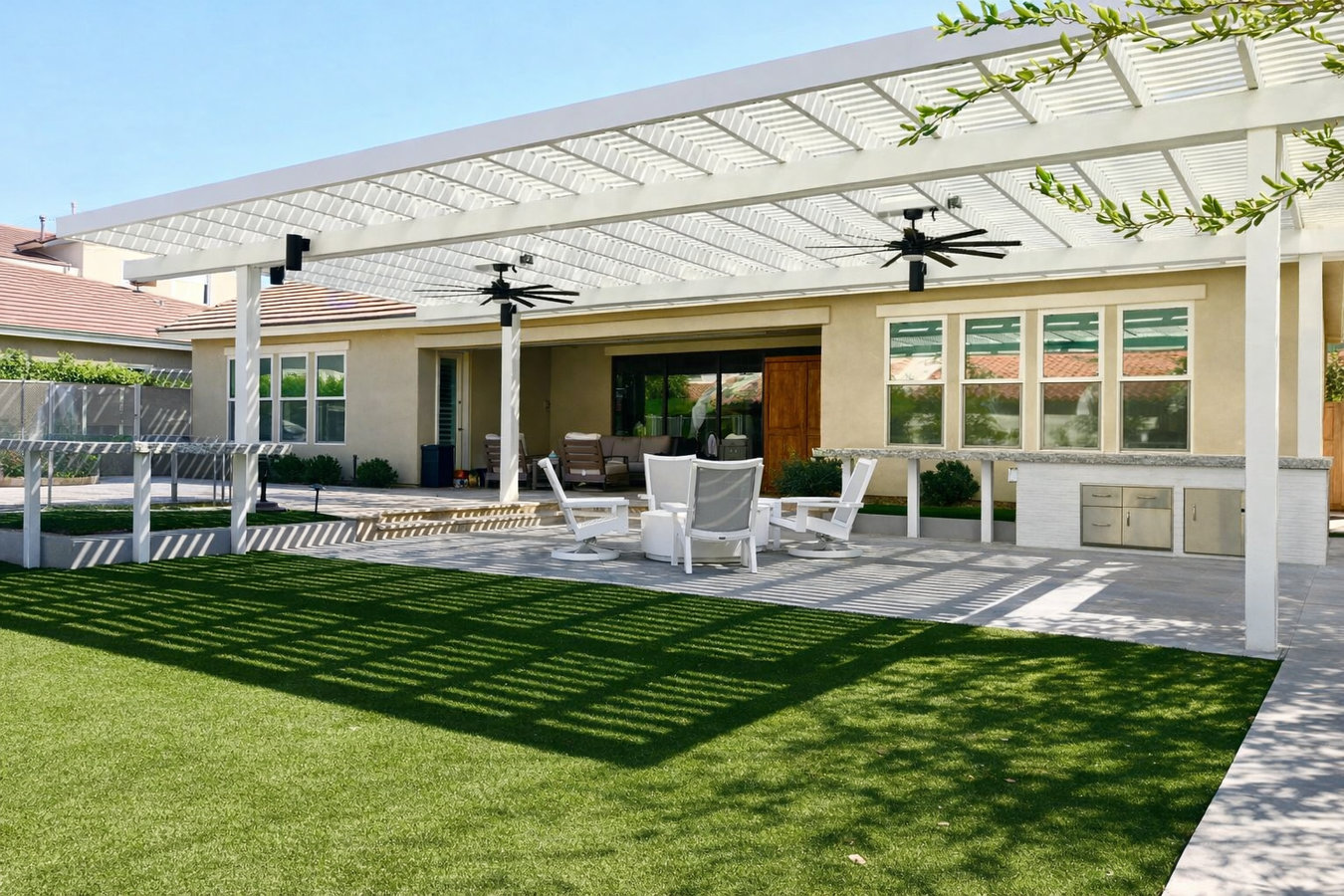
Your patio is there, but the summer sun and daily thunderstorms keep you inside. We install patio covers in Palm Coast with solid roofs, proper wall attachment, Flagler County permits, and materials rated for Florida's coastal wind zone.
Patio cover installation in Palm Coast attaches a permanent roof-like structure to your home's exterior wall, covering your existing concrete slab with an insulated or solid aluminum roof system - permitted through Flagler County Building Services, with most projects completed in one to four days once permits are approved.
A patio cover is not a screened enclosure and it is not a sunroom - it is a covered outdoor space. The sides stay open, you keep the feel of being outside, but you get shade from the afternoon sun and shelter through most of Palm Coast's summer thunderstorms. For homeowners who want to take the next step and fully enclose the space, our patio enclosures page covers screened and glass wall options that give you walls without full climate control requirements.
Every patio cover we install in Palm Coast is permitted through Flagler County Building Services and built with materials approved for Florida's coastal wind zone. An unpermitted cover attached to a concrete block wall with the wrong hardware does not just look bad over time - it can become a structural liability in the first serious storm, and it will create problems when you go to sell.
If you step outside in the afternoon and immediately step back in, your patio is not working for you. Palm Coast's summer sun is intense enough that an uncovered concrete slab reaches surface temperatures well above what you can sit on comfortably, making the space essentially unusable during the months when you most want to be outside.
Constant UV exposure in a place with as much sunshine as Palm Coast breaks down outdoor fabrics, finishes, and concrete sealers much faster than in northern climates. If you are replacing cushions every season or noticing your patio surface looking washed out, a cover would dramatically extend the life of everything underneath it.
Palm Coast's rainy season brings storms that arrive fast and drop heavy rain with little warning. If you find yourself watching the sky every time you sit outside from June through September, a solid-roof patio cover lets you stay outside through most of those storms and enjoy the rain without getting soaked.
If you have an older aluminum cover with rust streaks running down your exterior wall, water stains on the ceiling of the covered area, or panels that have started to bow or separate, those are signs the structure is failing. Water may already be getting behind your siding - a problem that gets more expensive the longer it goes unaddressed.
Every patio cover project starts with an on-site visit to measure your space, check how the structure will attach to your home, and confirm the soil conditions around your patio slab. A large portion of Palm Coast's housing stock was built during the ITT development era using concrete block construction - attaching a patio cover to a concrete block wall requires specific anchors and hardware that are different from what is used on wood-frame homes, and we have done this work throughout the area. The right flashing at the wall junction is what keeps water out of your wall cavity for the long term.
For homeowners who want more than just a covered space, our sunroom design service can help you think through a broader project that incorporates the patio cover into a fully planned outdoor room, and our patio enclosures page covers the next step up if you want screened or glass walls added to your covered space.
Best for homeowners who want a noticeably cooler space underneath - insulated panels significantly reduce heat transfer compared to bare aluminum, which matters most during Palm Coast's five-to-six-month summer.
Best for homeowners who want shade and airflow without the premium cost of insulated panels - a practical middle option for patios used mainly in the morning and evening.
Best for homeowners whose existing patio cover is rusting, sagging, or leaking at the wall - we remove the old structure and install a new permitted cover with correct flashing and coastal-approved materials.
Best for homeowners who want to use the covered space in the evenings - integrated lighting planned and wired at installation time rather than added as an afterthought.
Flagler County sits in a coastal wind zone where structures attached to your home must be designed and approved for sustained winds of 130 miles per hour or more. This is stricter than what is required in many inland Florida counties, and it eliminates a number of patio cover systems that are sold and installed without issue elsewhere. A contractor who pulls a permit in Flagler County has to use materials that are specifically approved for this wind zone - which is one of the most concrete reasons to insist on a permitted job. From June through September, Palm Coast gets intense daily thunderstorms that can drop more than an inch of rain in under an hour. A cover that is not properly flashed where it meets the house will funnel that water directly toward your foundation or into your wall cavity.
Homeowners in Ormond Beach and Edgewater face the same wind zone requirements and the same concrete block attachment challenges as their Palm Coast neighbors. We work in all of these areas and come prepared with the hardware and anchoring methods specific to CBS construction. The HOA approval process in Palm Coast's planned communities can add three to six weeks to a project timeline - sometimes longer if an HOA board meets monthly. We help prepare those submissions so the first review is the only one.
We reply within one business day. The first conversation covers your patio size, your HOA situation, and what you are hoping the cover will do for your outdoor space - no obligation, no sales pitch.
We visit your home, measure the space, check the wall construction type, and look at how the cover will drain. You get a written estimate that breaks out materials, labor, and permits separately - no lump sums.
We submit the Flagler County permit application and, if needed, prepare your HOA's architectural review submission. Plan for one to three weeks for permit review, plus HOA timeline. You do not need to track anything down yourself.
Most installations take one to three days. A Flagler County inspector verifies the anchoring, roof attachment, and flashing. Before we leave, we walk the finished cover with you and clean up the area around the footings - you keep your closed permit record for your files.
Free estimate. No obligation. We handle Flagler County permits and HOA submissions.
(386) 529-0883Most of Palm Coast's older homes are built with concrete block walls - a construction type that requires specific masonry anchors rather than the wood screws used on frame houses. We have done this work throughout Flagler County and come prepared with the right hardware from the start.
Flagler County's coastal wind requirements eliminate many patio cover systems available in other markets. We use only materials that are approved for use in Florida's coastal wind zone and include product approval references in every permit application we file. Florida Building Commission maintains the statewide product approval database.
We file the Flagler County permit application, schedule required inspections, and close the permit at project completion. You get a copy of the permit record to keep with your home's documents - the kind of paper trail that matters at resale and for insurance purposes.
Before we dig any footings, we call Florida 811 for a utility locate - a step required by Florida law and a step that protects your irrigation lines, electrical runs, and any other underground utilities from accidental damage during installation.
Every patio cover installation we complete in Palm Coast is permitted, wind-zone approved, and attached to your home with the right hardware for your wall construction type - so it holds up through the storms that come through this part of the coast and stands on record as a legitimate improvement when you go to sell.
Plan a larger outdoor living project that incorporates your patio cover into a fully designed, permitted sunroom or enclosure.
Learn MoreTake the next step beyond a patio cover with screened or glass walls that enclose the space and keep out bugs, wind, and rain.
Learn MorePermit slots fill up heading into spring - lock in your project now before the summer rainy season arrives. Call or request a free estimate.